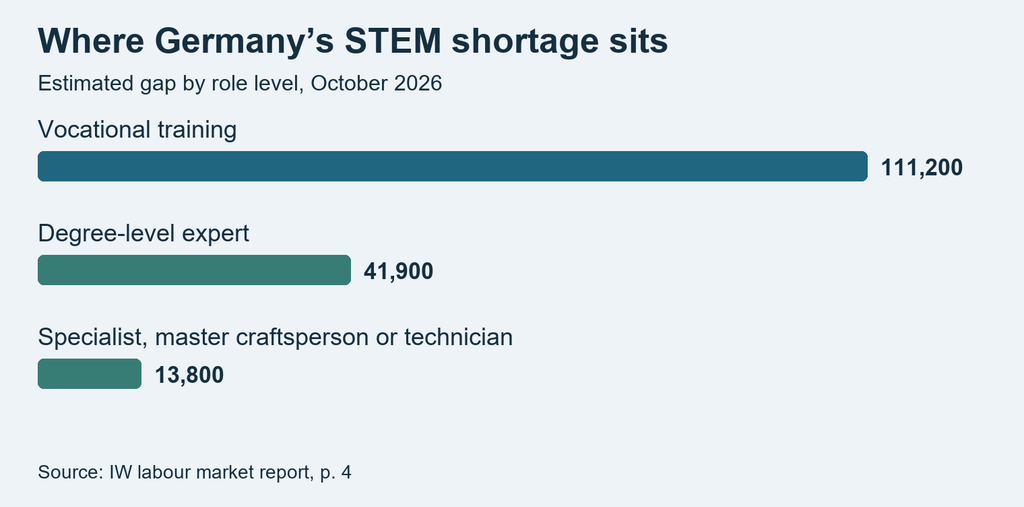
Germany’s estimated shortage in STEM occupations reached 166,900 in October 2026, up 12.4% from a year earlier. If you’re finishing an engineering, science or computing degree in Germany, the part of that headline to look at first is the 41,900 estimated gap in expert roles, which typically require a university degree. Even within that category, your prospects depend on the occupation, employer and region. IW labour market report, p. 4
Where the shortage grew
The biggest change was in roles that typically require vocational training. They accounted for about two-thirds of the October gap. The estimate for degree-level expert roles rose more modestly, from 40,800 to 41,900. IW calculates the gap using vacancy and unemployment data and accounts for mismatches across 36 occupational categories. The resulting figures describe shortages, so they cannot tell you how many roles are open to graduates or how often international applicants are hired.
Machinery and vehicle technology illustrates why this matters. The report puts the gap at 36,600 across qualification levels in that field. A mechanical engineering graduate still has to identify the roles that fit their degree and check what employers ask of someone at the start of their career.
What the AI supplement tells us about skills
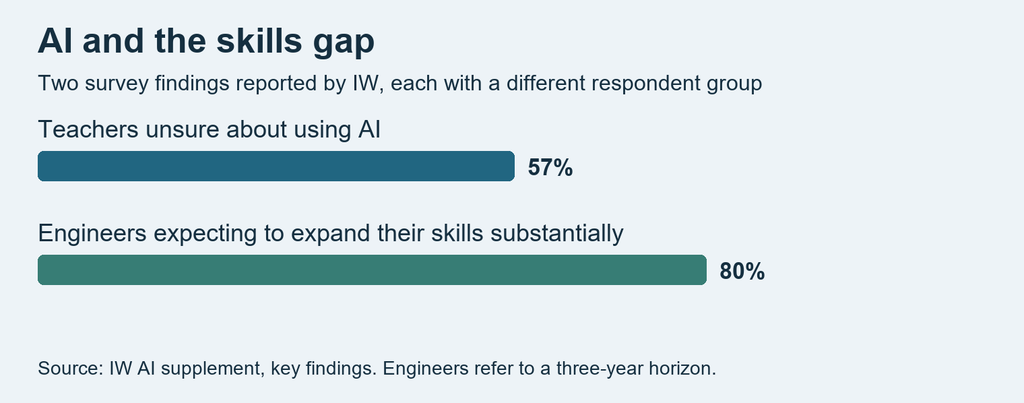
In a VDI study cited by IW, 80% of surveyed engineers expected to expand their skills substantially over the next three years, particularly in AI. The supplement also reports that 57% of teachers felt rather or very unsure about using AI tools. These findings address different groups and questions. They show why continuing education matters, but they don’t tell you which AI tools a particular employer expects you to know. IW AI supplement
What the MINT-Meter tells us about vocational training
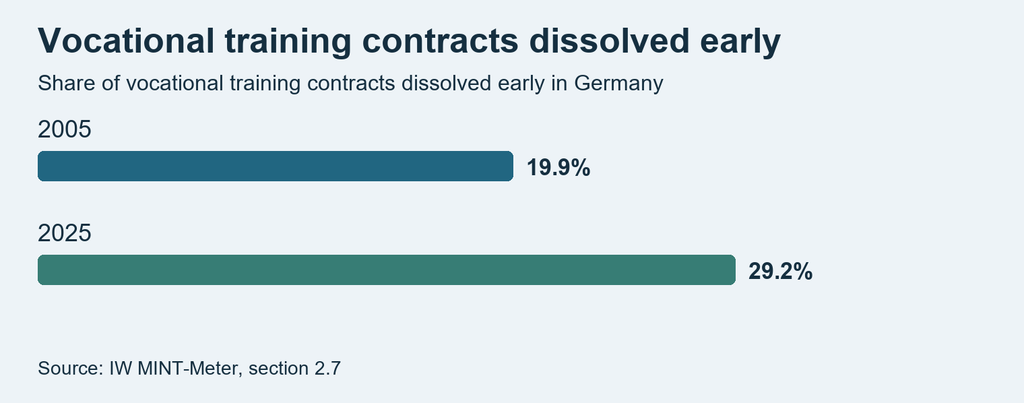
The MINT-Meter tracks the education pipeline behind the labour market numbers. One indicator shows the share of vocational training contracts dissolved early in Germany rising from 19.9% in 2005 to 29.2% in 2025. An early contract termination can include a change of employer or training programme, so the indicator cannot establish how many people left vocational training altogether. MINT-Meter, section 2.7, linked in the BDA release
How to use the numbers in your own job search
Pick a role you could see yourself doing and compare a few ads in the same region. If you’re a mechanical engineering graduate, for example, search both Junior Konstrukteur Maschinenbau and Konstruktionsingenieur Maschinenbau. For each ad, write down four things: the qualification, the experience required or preferred, the software named, and the language requirements. Federal Employment Agency Jobsuche
Example: A design role asks for strong Creo skills and says several years of experience are ideal. If you have relevant Creo work from a thesis or internship, you may have a case for applying. Give priority to roles where your experience already matches the tasks, and use recurring gaps across several ads to decide what to practise next.