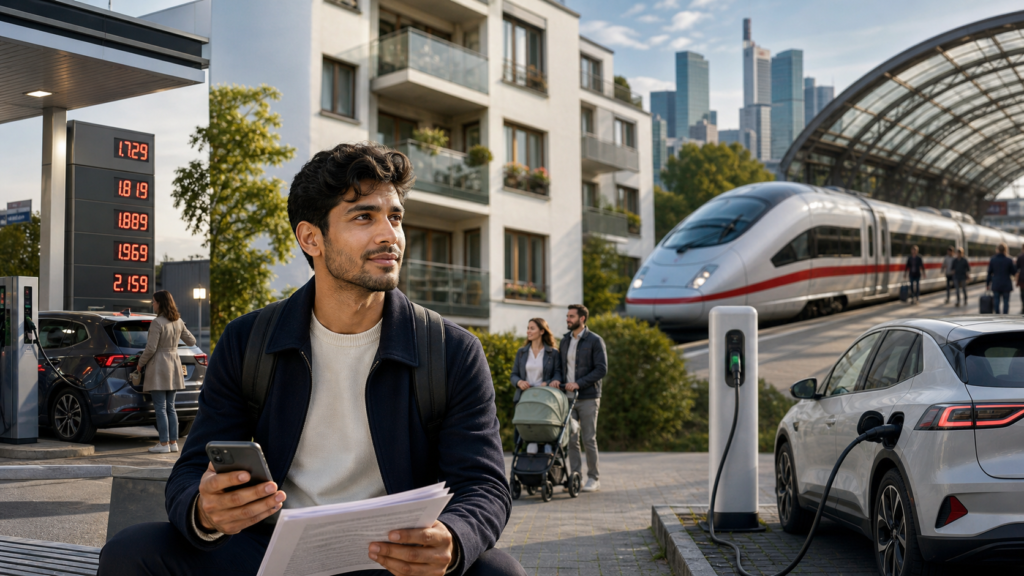
May 2026 is not just another month on the calendar in Germany. For many people, it could mean cheaper fuel, a possible tax-free bonus, higher public-sector salaries, more stable train prices, better tenant protection, new electric-car support, and expanded health screening for newborns.
Some changes are already active. Some still depend on final political approval. And some will only matter if your employer, landlord, or personal situation fits the rules.
So here is the clear, practical breakdown of the most important Germany May 2026 changes — and what they actually mean for everyday life.
Could Germany’s New Rent Reform Finally Close Costly Landlord Loopholes?
For tenants, this may be the most important long-term development of May 2026.
The German cabinet has approved a new rental reform package, often discussed as Mietrecht II, aimed at tightening tenant protection in areas where housing pressure is already intense. The reform now moves into the parliamentary process, so details can still change before becoming final law.
The key idea is simple: landlords should have fewer ways to bypass the Mietpreisbremse, Germany’s rent brake.
One major target is furnished apartments. In cities like Munich, Berlin, Hamburg, Frankfurt, and Stuttgart, furnished flats are often used as a premium product — sometimes with unclear extra charges hidden inside the total rent. Under the government proposal, furniture surcharges would have to be shown separately and must be reasonable. For a fully furnished apartment, the official government explanation says a surcharge of up to 10% of the net cold rent may be considered appropriate. (Bundesregierung)
Index-linked rents are also under pressure. These contracts allow rent to rise with inflation, which became painful for many tenants after recent price shocks. The planned reform aims to limit how strongly inflation can push up rent in areas covered by the rent brake. Short-term lease models are also being reviewed because some landlords have used repeated short contracts to avoid normal rent-control rules. (DIE WELT)
What this means for you:
If you are renting in Germany, especially in a high-demand city, keep an eye on this reform. It may not reduce your rent overnight, but it could make rent increases, furnished-flat pricing, and short-term contracts more transparent and easier to challenge.
Will Fuel Actually Become Cheaper at the Petrol Pump?
Drivers may see some relief in May and June, but the full saving is not guaranteed.
Germany has approved a temporary cut in energy tax on petrol and diesel by around 17 cents per litre for two months. The measure is designed to soften the impact of sharply higher fuel prices linked to the Iran war and disruption fears around oil transport through the Strait of Hormuz. Reuters reported that the relief package is worth about €1.6 billion, but also stressed the key uncertainty: whether fuel companies pass the full reduction on to consumers. (Reuters)
That is the part many drivers should watch closely. A tax cut does not automatically mean the same amount appears as a clean price drop on the large digital board outside the petrol station. Margins, timing, local competition, and company pricing decisions all matter.
What this means for you:
If you drive regularly, compare prices more actively in May and June. The saving could be real, but do not assume every petrol station will pass on the full 17 cents.
Can Employees Really Get a €1,000 Tax-Free Bonus?
Yes, but this is not automatic money.
The Bundestag approved a voluntary tax-free relief bonus of up to €1,000 for employees. Employers can pay it until June 30, 2027, and Reuters reported that the payment would be tax-free for workers and tax-deductible for employers. But it remains voluntary, meaning employees cannot simply demand it from their company. (Reuters)
This is important because many people may hear “€1,000 bonus” and assume it is a government payout. It is not. It is a legal possibility for employers.
What this means for you:
If your company is financially stable, this could become a useful salary conversation. But frame it carefully: “Is our company planning to use the new tax-free relief bonus?” sounds much better than “Where is my €1,000?”
Are Public-Sector Workers Getting More Salary from May?
For many public-sector employees, yes.
From May 2026, employees covered by the TVöD agreement for federal and municipal public service receive a further 2.8% salary increase. This follows the collective agreement that included a 3% increase from April 2025 and another 2.8% from May 2026. (bmi.bund.de)
This affects many people working in public administration, municipal services, public hospitals, childcare, and related institutions under the relevant agreement.
What this means for you:
If you work in the public sector, check your May or June payslip carefully. The gross increase is clear, but the net effect depends on taxes, health insurance, pension contributions, and your individual salary group.
Will Deutsche Bahn Tickets Stay Stable This Year?
For long-distance travellers, there is at least some price stability.
Deutsche Bahn has said it will keep long-distance ticket prices stable for one year from May 1, 2026, covering ICE, IC, and EC services. Reports note that the usual annual price increase will be skipped for this period. (DIE ZEIT)
But “price freeze” does not mean every ticket will always be cheap. Deutsche Bahn still uses dynamic pricing, so ticket prices can rise depending on demand, route, travel time, and how late you book.
What this means for you:
The base pricing environment may be more stable, but the old rule still applies: book early, avoid peak times where possible, and compare Sparpreis options before paying full Flexpreis.
Is Germany’s New EV Subsidy Finally Becoming Usable?
For people planning to buy or lease an electric vehicle, May 2026 matters because the application portal is expected to open.
Germany’s new EV grant scheme applies to private individuals who newly register eligible electric cars, certain plug-in hybrids, or range-extender vehicles from January 1, 2026 onward. The support ranges from €1,500 to €6,000, depending on vehicle type, income, and family size. The government says applications can be submitted retroactively, and the online portal is expected to become operational in May 2026. (bundesumweltministerium.de)
The total funding pot is planned at €3 billion, enough for an estimated 800,000 vehicles between 2026 and 2029. (bundesumweltministerium.de)
What this means for you:
Do not buy only because of the subsidy. First check whether your income, vehicle model, registration date, and leasing or purchase setup meet the conditions. A subsidy is helpful only if the car still makes financial sense after insurance, charging, maintenance, and depreciation.
What Changes for Newborn Screening in Germany?
From mid-May, newborn screening in Germany becomes broader.
Germany’s expanded newborn screening will include tests for vitamin B12 deficiency, homocystinuria, propionic acidemia, and methylmalonic aciduria. The Federal Joint Committee documentation explains that these conditions can threaten a child’s motor and neurocognitive development, and early diagnosis can allow treatment before symptoms become severe.
For parents, this is not a flashy financial change, but it may be one of the most meaningful health updates of the month.
What this means for you:
If you are expecting a baby in Germany, ask your doctor or hospital how newborn screening is handled, what is included, and how results are communicated.
Why Is Germany Celebrating the First Nationwide Ehrentag?
On May 23, 2026, Germany marks the first nationwide Ehrentag, a day of participation and community engagement linked to the birthday of the Grundgesetz, Germany’s Basic Law.
The initiative is supported by Federal President Frank-Walter Steinmeier and the German Foundation for Engagement and Volunteering. It is designed as a “Mitmachtag” — a day for people, associations, initiatives, companies, and local communities to take part in activities that strengthen civic life. (Federal President of Germany)
It is not a public holiday, so shops and offices do not automatically close. But symbolically, it matters. In a time when many people feel disconnected from politics and institutions, Germany is using the birthday of its constitution to highlight participation, volunteering, and democratic responsibility.
What this means for you:
If you are new in Germany, this is a good chance to understand something deeper about the country: Germany is not only bureaucracy, taxes, and appointments. It is also built on local clubs, volunteering, neighbourhood action, and civic responsibility.
What Should You Personally Do in May 2026?
May 2026 is a month to check the small details that can save money or prevent confusion.
If you drive, track fuel prices instead of assuming the tax cut reaches you fully. If you are employed, ask whether your company plans to use the €1,000 relief bonus. If you work in the public sector, review your payslip. If you rent, follow the Mietrecht II reform closely, especially if you live in a furnished flat or have an index-linked contract. If you travel by train, book early even with the price freeze. If you are considering an EV, wait for the official portal and check eligibility before committing. And if you are expecting a child, ask about the expanded newborn screening.
Germany often changes quietly. A law passes, a rule shifts, a portal opens, a salary table updates — and many people only notice months later.
The smart move is to stay ahead.
With ETAINFI, you can keep learning how Germany’s rules, systems, and opportunities actually work — in clear language, without panic, and with practical steps you can use in real life.